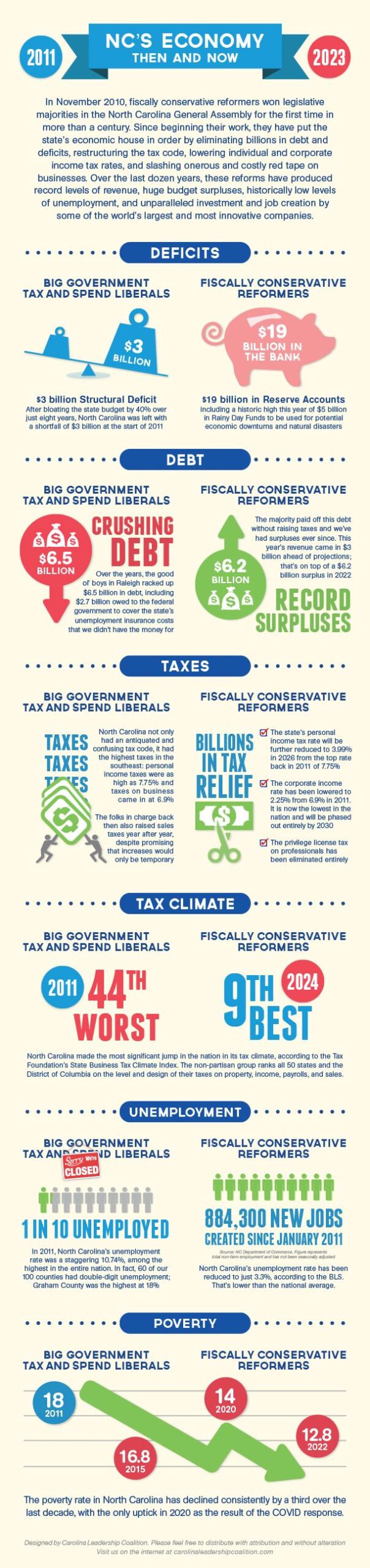
North Carolina’s commonsense fiscal reforms of the last 15 years have continued to yield positive results for the state’s economy. Earlier this year CNBC rated North Carolina as the top spot for business and payroll company ADP named Raleigh the best city for recent college graduates to find a job for the second year in a row.
The plaudits keep coming, but this week’s editorial from the Boston Globe might be one of the more unexpected places to praise the pro-growth reforms by conservative leaders in North Carolina.
From the Boston Globe’s editors:
“….the Massachusetts Taxpayers Foundation’s latest competitiveness index report ranked the Commonwealth dead last in the nation for private employer job growth between 2023 and 2024, with a decline of 0.6 percent.
“Hasbro’s move to Boston is unquestionably good news. But it shouldn’t obscure that the state is facing serious, systemic headwinds, and policy makers need to be focusing on the broader business climate to attract new businesses and keep the ones we have.”
The editors then added:
“North Carolina is especially notable because it competes for many of the same high-tech businesses as Massachusetts. In 2024, North Carolina saw a $10.8 billion expansion of its life science industry when 25 companies announced expansions or new facilities…
“Massachusetts still has the second highest number of PhDs in its workforce — but North Carolina isn’t far behind, ranking at 10. The state boasts a slate of prestigious research universities and is a far cheaper place to live and do business. While Massachusetts has the 12th highest corporate tax in the country, North Carolina is in the bottom five — and will phase out the tax entirely by 2029.
“‘The bigger picture is grim,’ Jim Stergios, the executive director of the Pioneer Institute, said. A Pioneer report shows that the Greater Boston area lost about 30,000 private sector jobs over the past five years. Meanwhile, Charlotte and the Research Triangle — made up of Raleigh, Durham, and Chapel Hill — gained about a quarter million private sector jobs over the same period. ‘That’s the real competition,’ Stergios said.
“‘Competing with North Carolina means getting serious about improving the state’s competitiveness, either by reducing taxes, improving public infrastructure, reining in energy and housing costs, or a bit of all of the above.’”
The fiscally responsible policies implemented by conservative leaders since 2011 have undeniably made North Carolina stronger. That it has performed so well even journalists in progressive enclaves are having to acknowledge the strength of fiscal conservatism speaks to just how vindicated conservative leaders at the North Carolina General Assembly should feel.